Gammon and backgammon: how backgammon scoring works
Backgammon scoring has three results. A single game scores 1 point. A gammon scores 2: the loser has borne off no checkers. A backgammon scores 3: the loser has borne off none and has a checker on the bar or in the winner's home board. In long nardy the 2-point win is a mars, and there is no backgammon.
Backgammon win types: how many points is each worth?
| Result | Short backgammon | Long nardy |
|---|---|---|
| Single game | 1 point | 1 point |
| Gammon (mars in long nardy) | 2 points | 2 points |
| Backgammon | 3 points | no such result |
Whatever the result, the winner is the first player to bear off all 15 checkers. A gammon or a backgammon only adds points to that win.
The word "backgammon" means two things: the game itself and its biggest win. When players say "I won a backgammon", they mean the 3-point result.
What is a gammon in backgammon?
The game is over, and the loser still has all 15 checkers on the board: not one has been borne off. That is a gammon, or a mars in long nardy. To avoid it, bearing off one checker is enough, and for that you need all 15 in your home. When bearing off may start and how each die is used is explained in bearing off in backgammon.
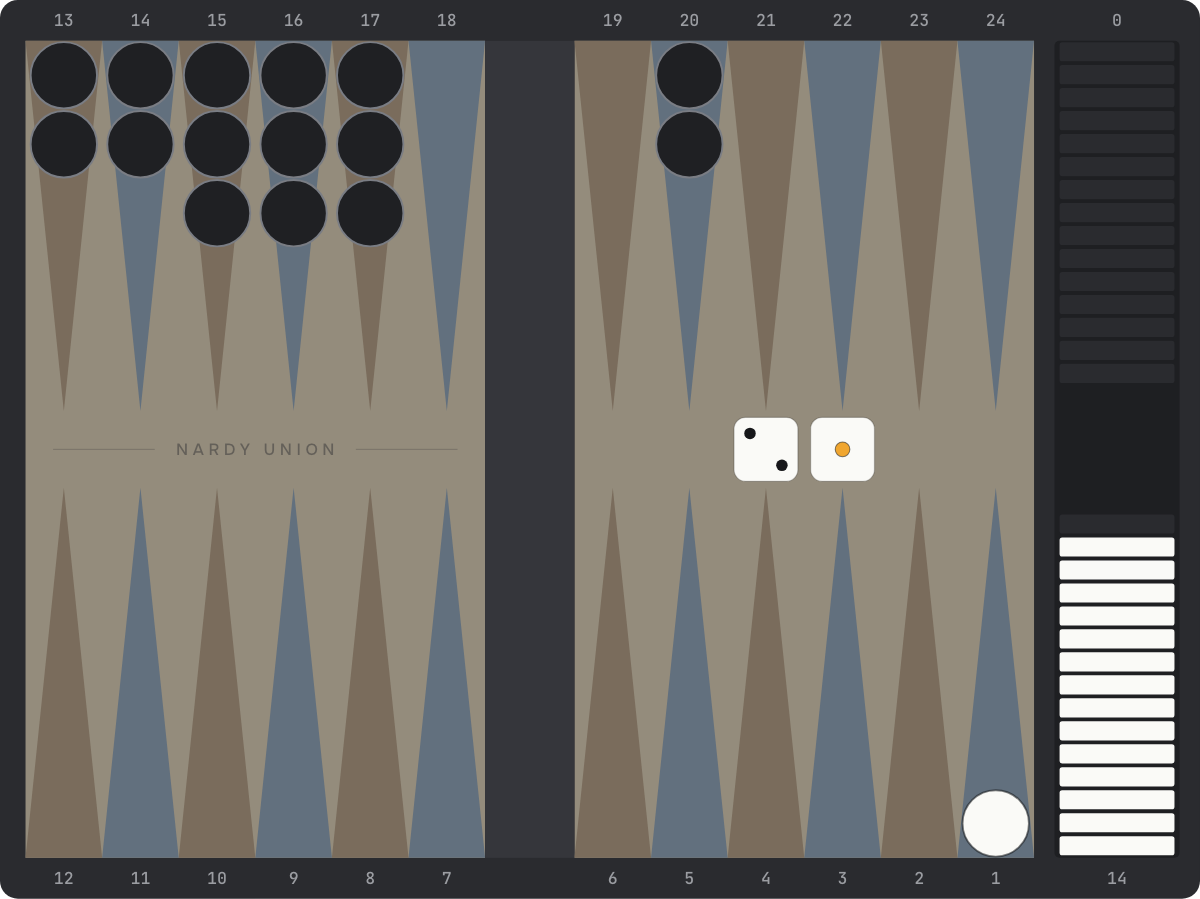
If Black had 14 checkers left on the board, one would already be off, and the game would be an ordinary single win worth one point.
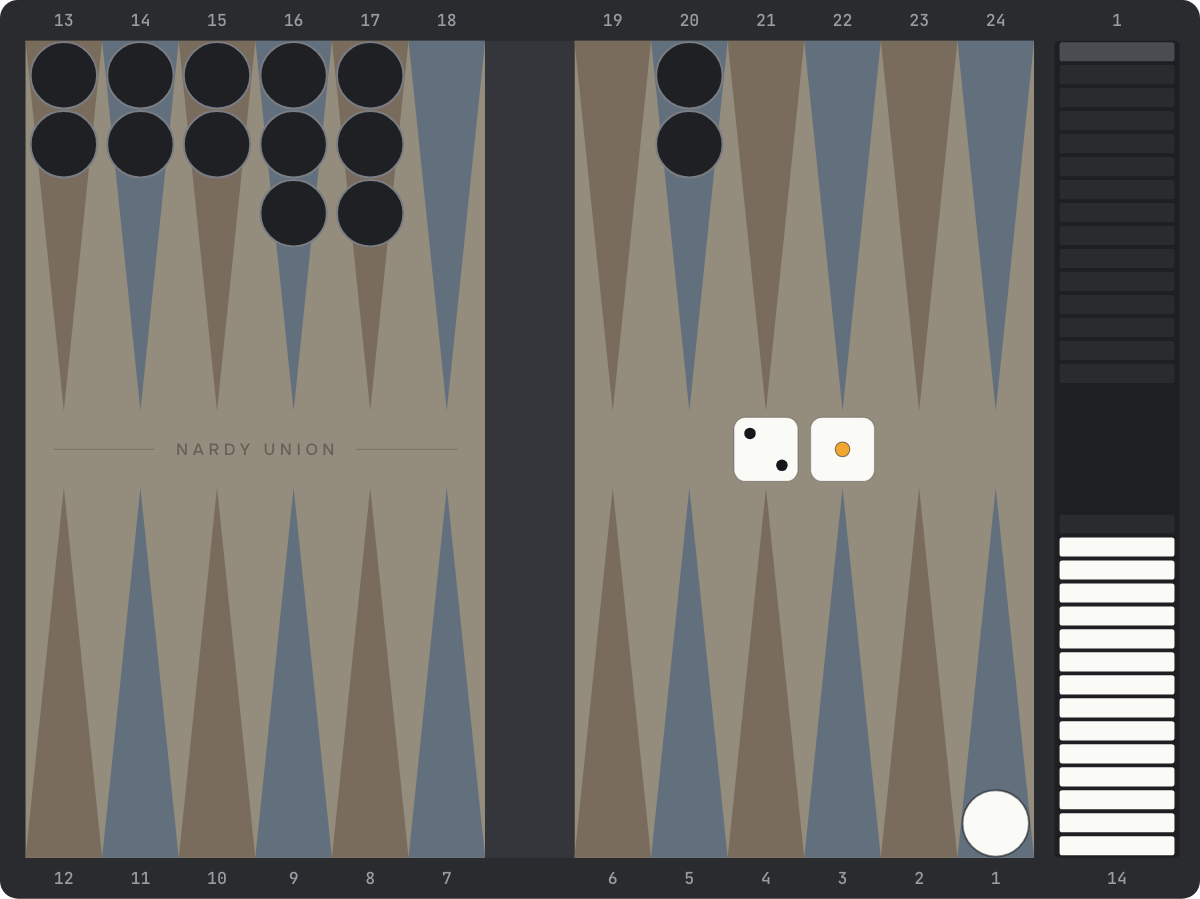
How do you avoid being gammoned?
In long nardy each player starts with a pip count of 360, the total distance all their checkers must travel to bear off. You can bear off only when all 15 are home, and then your pip count is at most 90 (all 15 on the farthest point of your home). So before your first checker comes off you must travel at least 270 pips. A roll gives 8.2 pips on average, so that is about 33 rolls (worked out under the site's rules). If your opponent bears off every checker before you finish that journey, you lose a mars.
What helps: don't keep checkers on the head longer than you need to, and don't leave one checker far behind. A single straggler stops you from bearing off even when the other 14 are home. More on how the game unfolds is in the long nardy rules.
What is a backgammon in backgammon?
A backgammon is the biggest win in short backgammon, 3 points, which is why it is also called a triple game. It counts when the loser has borne off no checkers and one of their checkers is on the bar or in the winner's home board, points 1 to 6.
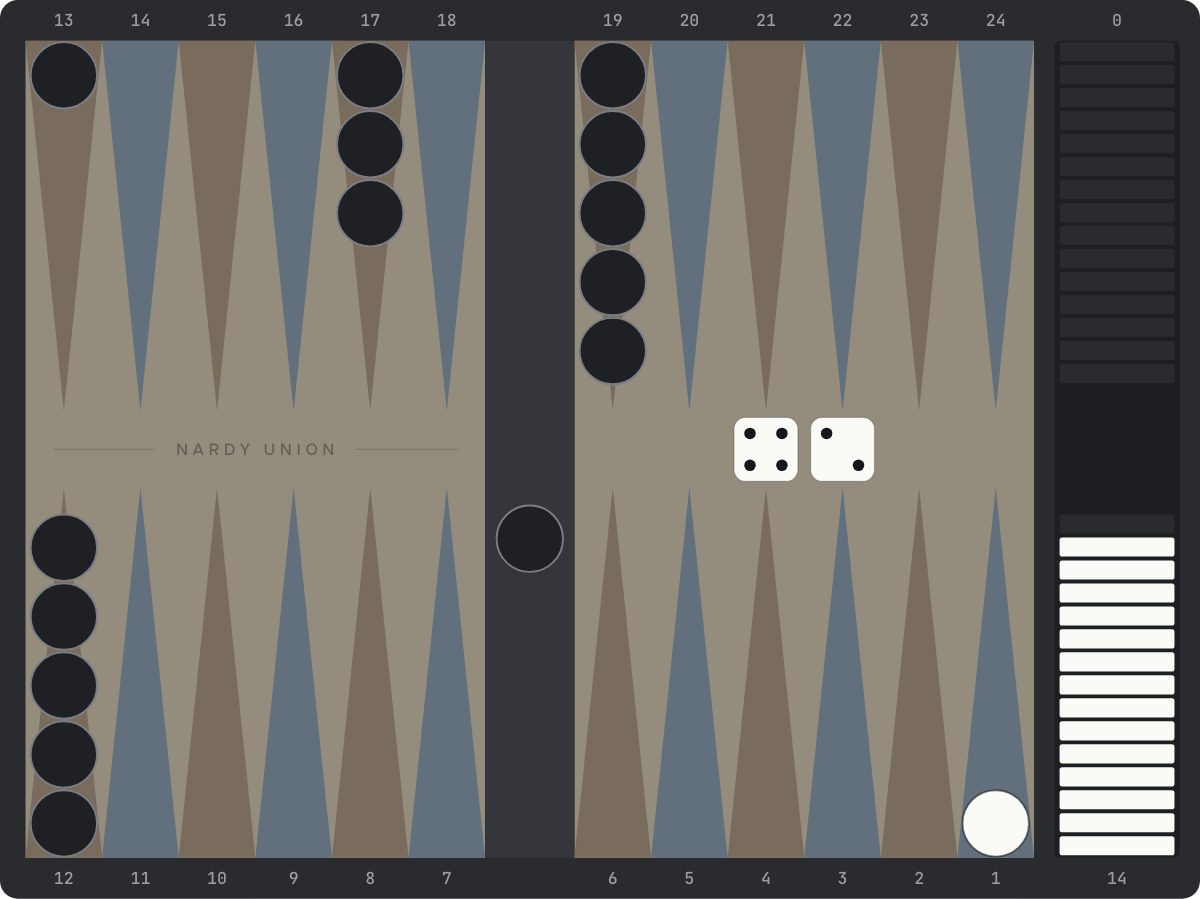
The line is the edge of the home board. A checker on the 7-point is already outside White's home, so this game ends in an ordinary gammon.
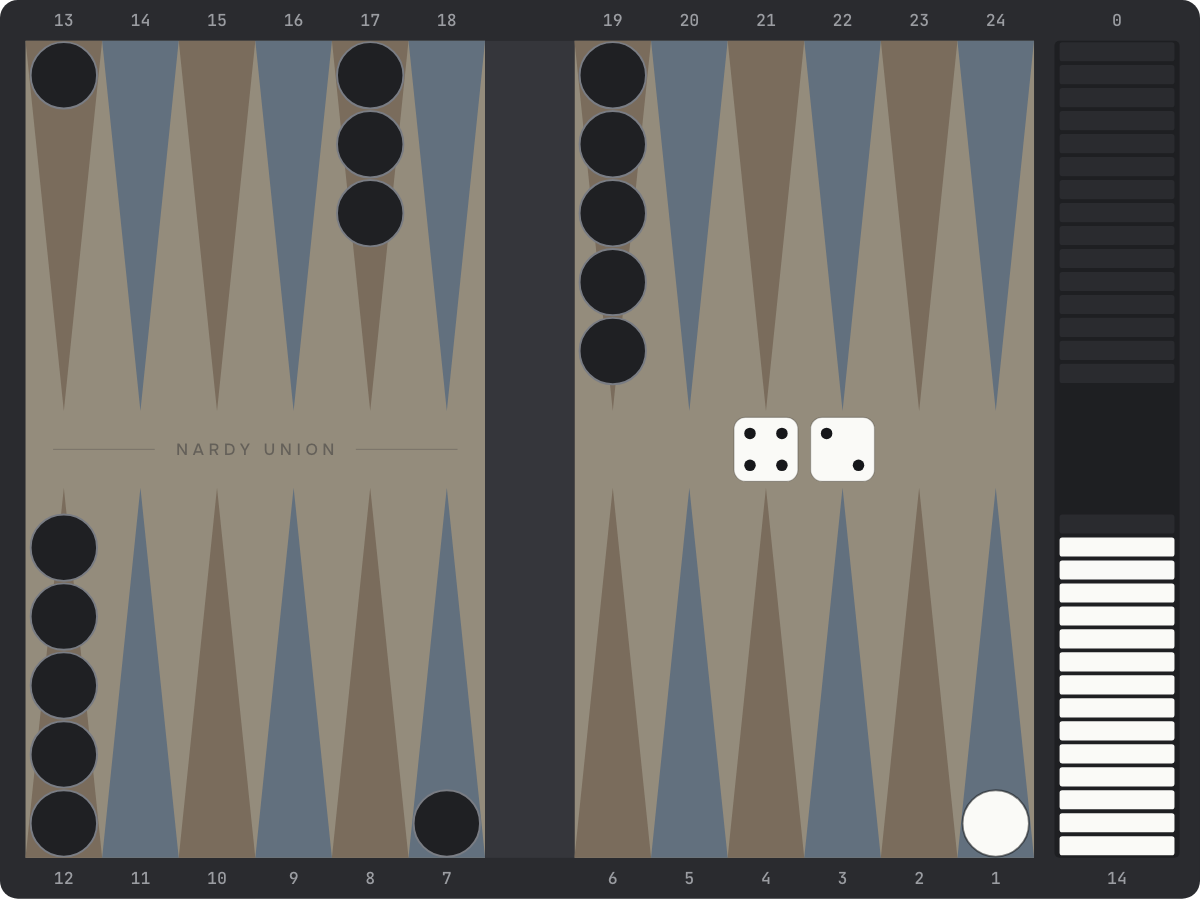
Gammon vs backgammon win: what is the difference?
A gammon has one condition: the loser has borne off no checkers. A backgammon adds a second: a checker of the loser's on the bar or in the winner's home board. Every backgammon meets the first condition too, but it is worth a point more. Long nardy has no backgammon: there is no hitting, so there is no bar.
Is there a "home mars"?
The name turns up in some rule sets for nardy. This site has no home mars: a game scores only by the table above, as a single game, a gammon or mars, or (in short backgammon) a backgammon. If you play over the board by other rules, agree on the scoring before you start.
How gammons and backgammons count with the doubling cube
In short backgammon the points are multiplied by the number on the doubling cube. A gammon with the cube on 4 scores 8 points, a backgammon with the cube on 2 scores 6. Long nardy has no cube, so a mars is always worth exactly 2. How the cube works, and when to double or take, is on the backgammon doubling cube page.
How to keep score in a backgammon match
A match is played to a set number of points. When you invite a friend on this site, you choose 1, 3, 5 or 7. After each game the winner adds 1, 2 or 3 points, times the cube, and the first player to reach the match length wins. A gammon can carry you past it: at 4–3 in a 5-point match, a gammon ends the match 6–3.
When one player first comes within one point of the match length, the next game is the Crawford game: nobody may double in it. Doubling returns in the game after. A 1-point match has no cube at all. A game against the computer has no match length: it is one game, scored by the table above.
See the score in a game
The site works out the result itself and shows it in the result window: "Single game", "Gammon", "Backgammon" or "Mars", with the points. Play a game against the computer to see how it looks. If you are just starting, read how to play long nardy, then pick a game: long nardy online or backgammon online. A summary of the rules is on the rules page.